
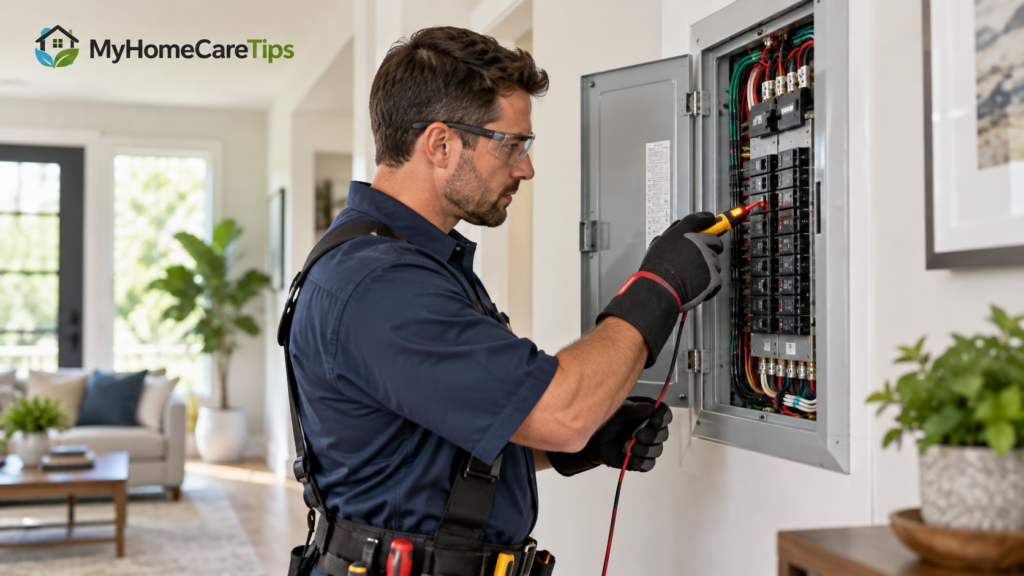
Electrical problems can cause fires, damage appliances, and put people at risk of serious injury. Simple safety habits can help protect your home and family. In this guide, you’ll learn 10 practical electrical safety tips every homeowner should know.
1. Avoid Overloading Electrical Outlets
Plugging too many appliances into one outlet or extension can cause overheating and increase the risk of an electrical fire. Use power strips carefully, avoid connecting multiple extension cords together, and spread high-power appliances across different outlets when possible.
2. Replace Damaged Cords and Plugs
Frayed wires, cracked plugs, and damaged extension cords can cause electric shocks or fires. Check cords regularly and replace any that are worn, loose, or exposing internal wires. Do not cover damaged areas with tape as a permanent repair.
3. Keep Electrical Appliances Away From Water
Water and electricity are a dangerous combination. Keep appliances, extension cords, chargers, and electrical devices away from sinks, bathrooms, wet floors, and other damp areas. Never touch electrical equipment with wet hands, and unplug appliances before cleaning them.
4. Unplug Appliances When Not in Use
Unplug appliances and chargers when they are not being used, especially devices that produce heat such as irons, kettles, and heaters. This can reduce unnecessary electrical risk and also prevent damage during sudden power surges.
5. Use Extension Cords Safely
Extension cords should be used carefully and mainly for temporary needs. Do not run them under rugs, through doorways, or where they can be crushed or damaged. Always use a cord that is suitable for the appliance and stop using it if it becomes hot, loose, or damaged.
6. Keep Children Away From Electrical Outlets
Young children may try to touch electrical outlets or insert objects into them. Use outlet covers where necessary, keep electrical cords out of reach, and teach children not to play with plugs, sockets, or electrical appliances.
7. Watch for Warning Signs of Electrical Problems
Flickering lights, burning smells, buzzing sounds, hot outlets, frequent power trips, or sparks can be signs of an electrical problem. Do not ignore these warning signs. Switch off the affected appliance or circuit if it is safe to do so, and contact a qualified electrician for proper inspection and repair.
8. Do Not Attempt Dangerous Electrical Repairs Yourself
Electrical repairs can be dangerous if you do not have the proper training. Avoid opening electrical panels, repairing damaged wiring, or working on live circuits yourself. For serious electrical problems, use a qualified electrician who can inspect and fix the issue safely.
9. Stay Safe While Waiting for an Electrician
If you notice sparks, a burning smell, damaged wiring, or an unusually hot outlet, keep everyone away from the area and stop using the affected appliance. Wear dry clothing and dry, closed shoes when moving around the area, and remove metal jewelry such as bracelets or necklaces. Do not touch exposed wires, damaged outlets, or electrical panels, even while wearing ordinary gloves or rubber shoes. If the main power switch can be reached safely without going near sparks, water, smoke, or damaged wiring, switch off the electricity. If there is smoke or fire, leave the area and contact emergency services—never pour water onto an electrical fire.
10. Have Your Electrical System Inspected Regularly
Even when everything appears to be working normally, hidden electrical problems can develop over time. Have a qualified electrician inspect your wiring, outlets, circuit breakers, and other important electrical components when necessary, especially in older homes or after repeated electrical faults. Regular checks can help identify problems before they become dangerous.
Final Thought
Electrical safety should be taken seriously in every home. Simple habits such as avoiding overloaded outlets, replacing damaged cords, keeping electricity away from water, and watching for warning signs can help reduce risks. When a problem is beyond basic safety steps, keep your distance and contact a qualified electrician rather than trying to repair it yourself.