
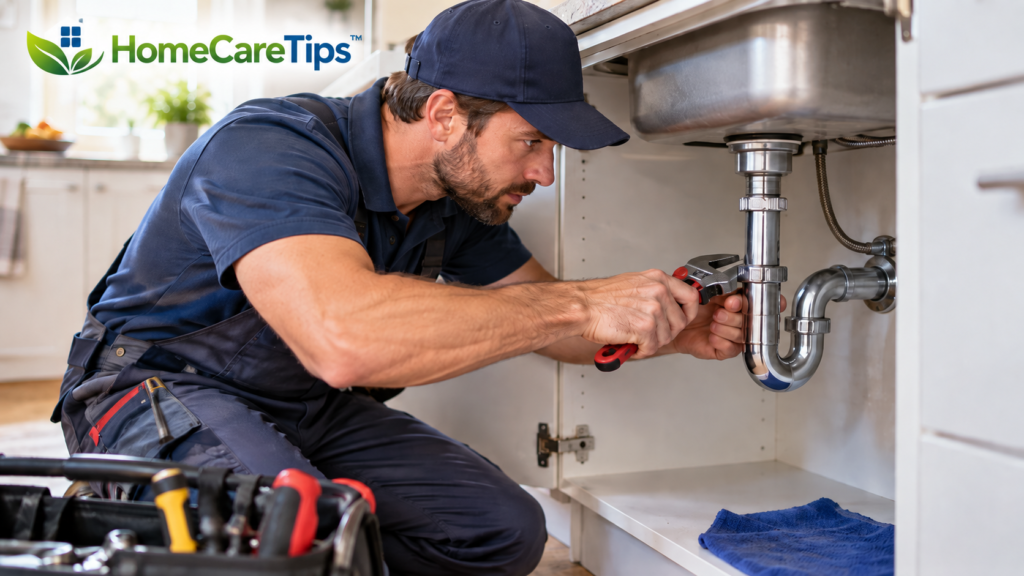
Plumbing problems can disrupt daily routines, waste water, and cause damage to floors, cabinets, and walls. Some minor issues can be investigated at home with basic tools, but others require professional attention to prevent a small fault from becoming a costly repair.
Knowing the difference is important. A slow-draining sink may have a simple blockage near the drain opening, while several blocked fixtures could indicate a deeper drainage problem. Similarly, low water pressure may be caused by a dirty tap aerator or a fault affecting the wider plumbing system.
This guide explains five common plumbing problems, what you can safely check, and when to contact a qualified plumber.
1. Slow-Draining Sink
A sink that drains slowly may have an accumulation of hair, soap residue, food particles, or grease inside the drain. The problem often develops gradually as debris collects and restricts the flow of water.
How to Investigate a Slow Drain
Remove visible debris. Put on suitable gloves and remove any debris you can safely reach around the drain opening. If the sink has a removable stopper, clean it according to the manufacturer’s instructions.
Try a sink plunger. Follow the plunger manufacturer’s instructions to create a seal around the drain. Use steady movements to help loosen a minor blockage. If the sink has an overflow opening, follow the appropriate guidance for preventing air from escaping through it.
Check the result. Run a small amount of water to see whether drainage has improved. Stop if the water begins rising or the blockage remains severe.
Avoid pouring boiling water into sinks with PVC pipework or delicate fixtures. Never mix drain-cleaning chemicals, as they can produce dangerous reactions.
When to Call a Plumber
Contact a plumber if the sink remains blocked, water backs up repeatedly, or several drains in the home are affected. These signs may indicate a blockage deeper in the drainage system.
2. Clogged Toilet
A toilet can become blocked when too much toilet paper or unsuitable materials obstruct the drain. You may notice that the water rises unusually high after flushing or drains much more slowly than normal.
How to Deal With a Minor Toilet Blockage
Stop flushing. If the water level is rising, do not flush again. Another flush could cause an overflow.
Allow the water level to settle. Wait for the bowl to return to a safe level before attempting to clear the blockage. If water is close to overflowing, avoid adding more water.
Use a toilet plunger. Choose a toilet plunger designed to fit the outlet. Position it to create a seal and use controlled, steady movements according to the tool’s instructions.
Check whether the blockage has cleared. If the water returns to its normal level, test the toilet cautiously. Do not continue flushing repeatedly if the water rises again.
Avoid chemical drain cleaners unless both the toilet and product manufacturers explicitly permit their use. Some products can damage plumbing components or expose you to hazardous splashes.
When to Call a Plumber
Seek professional help if the toilet repeatedly clogs, a solid object is lodged inside, multiple fixtures are backing up, or sewage is returning through the drains.
3. Running Toilet
A running toilet continues allowing water into the bowl or tank after flushing. This can waste water and increase household expenses, even when the sound is barely noticeable.
Common causes include a worn flapper, an incorrectly adjusted float, or a faulty fill valve.
What to Check
Remove the tank lid carefully. If your toilet has an accessible cistern, lift the lid and place it somewhere secure. Some lids are heavy or fragile.
Observe the water movement. After flushing, watch whether water continues entering the overflow tube or whether the flapper fails to seal properly. This can help identify which component may be responsible.
Check the flapper. If it is visibly misaligned, consult the toilet manufacturer’s instructions before attempting to reposition it. A damaged or deteriorated flapper may need replacing with a compatible part.
Inspect the fill mechanism. If the water level is too high or the fill valve does not stop the flow, the float or valve may need adjustment or replacement according to the manufacturer’s guidance.
Avoid forcing plastic components or dismantling unfamiliar mechanisms. If the cause is unclear, have a plumber inspect the toilet.
When to Call a Plumber
Contact a plumber if the toilet continues running after a suitable adjustment, the tank has a crack, or the internal mechanism is damaged and difficult to replace.
4. Low Water Pressure
Low water pressure can make showers frustrating and cause taps to deliver less water than usual. The cause may be a clogged aerator, mineral deposits inside a showerhead, a partially closed valve, or a wider supply problem.
How to Investigate Low Pressure
Check more than one fixture. Test several taps and the shower, if available. If only one fixture is affected, the problem may be local to that tap or showerhead.
Clean the aerator. A tap aerator is the small fitting at the end of many taps that shapes the water flow. If the manufacturer permits removal, inspect it for mineral deposits and clean it using an appropriate method.
Inspect the showerhead. Mineral deposits can obstruct small openings. Clean the showerhead according to its manufacturer’s instructions and reinstall it securely.
Check accessible valves. If you can safely identify the relevant supply valve, check whether it is fully open. Do not force a stiff or damaged valve.
When to Call a Plumber
Professional investigation is advisable if several fixtures suddenly lose pressure, the pressure changes repeatedly, or you notice damp walls, unexplained moisture, discoloured water, or unusual pipe noises.
Do not attempt to adjust a pressure regulator or dismantle pressurised plumbing equipment unless you understand the system and its safety requirements.
5. Leaking Pipe Joint
A leaking pipe joint can leave water beneath a sink, inside a cupboard, or around an exposed plumbing connection. Even a small leak can damage nearby materials if it continues unnoticed.
Possible causes include a deteriorated seal, a damaged fitting, corrosion, or a loose connection.
What to Do About a Leaking Joint
Protect the surrounding area. Move stored items away from the leak and place a suitable container beneath dripping water. Use a cloth to remove standing water where it is safe to do so.
Identify the source. If the pipe is accessible, dry the outside and observe where moisture first appears. Do not dismantle the joint just to investigate it.
Isolate the water supply. If you can safely identify the correct isolation valve, close it. For a substantial or continuing leak, shut off the main water supply if safe.
Avoid overtightening. Applying excessive force to a connection can crack fittings, damage threads, or worsen the leak. Do not use makeshift repairs as a substitute for proper repair of a damaged joint.
Arrange the appropriate repair. If the joint is corroded, the pipe is cracked, or the leak continues, contact a qualified plumber.
If the water is near electrical outlets, wiring, or appliances, keep away from the affected area and seek appropriate professional assistance.
When to Call a Plumber
A persistent leak, damaged pipe, concealed leak, or connection that cannot be safely isolated requires professional attention. If you notice damp patches or unexplained water stains on walls or ceilings, the leak may be hidden inside the building.
When a Plumbing Problem Needs Urgent Attention
Not every plumbing issue should be treated as a simple DIY task. Contact a qualified plumber promptly if you notice:
- A burst pipe or substantial water leak.
- Sewage backing up into a sink, bath, or toilet.
- Repeated blockages affecting several fixtures.
- Water stains, damp walls, or unexplained moisture that may indicate a hidden leak.
- Sudden, persistent pressure loss affecting multiple fixtures.
- Corroded pipes, cracked fittings, or damage that requires specialised tools.
For a major leak, turn off the main water supply if you can do so safely. Keep away from electrical equipment and outlets exposed to water. Sewage backups should be treated carefully because contaminated water can pose health risks.
How to Prevent Common Plumbing Problems
Regular checks and sensible household habits can help reduce avoidable plumbing issues.
Keep Drains Clear
Use suitable drain covers to catch hair and debris. Dispose of cooking grease and oil in an appropriate container rather than pouring them down the sink.
Use Toilets Correctly
Flush toilet paper and human waste only, unless local plumbing guidance states otherwise. Avoid flushing wipes, sanitary products, cotton buds, or other items that may cause blockages.
Inspect Exposed Plumbing
Occasionally look beneath sinks and around accessible pipe connections for dampness, corrosion, or dripping water. Early detection can limit damage.
Clean Tap Aerators and Showerheads
Mineral deposits can reduce water flow over time. Clean these components according to the manufacturer’s instructions rather than using harsh methods that may damage their finish.
Respond to Changes Promptly
Unusual water pressure, repeated drain blockages, unexplained dampness, or a sudden increase in water use may indicate a developing problem. Investigate safely instead of ignoring the signs.
Routine maintenance cannot prevent every plumbing fault, but it can help you identify issues before they cause more extensive damage.
Final Thoughts
Some common plumbing problems can be investigated at home with basic tools, careful observation, and the correct instructions. Slow drains, minor toilet blockages, running toilets, and certain water-flow problems may have straightforward causes.
However, a symptom does not always reveal the underlying fault. Repeated blockages, damaged pipes, sewage backups, and substantial leaks may require professional diagnosis and repair.
Start with simple, low-risk checks, follow the manufacturer’s guidance, and stop if the work becomes unfamiliar or unsafe. Knowing when to call a qualified plumber is just as important as knowing what you can handle yourself.