
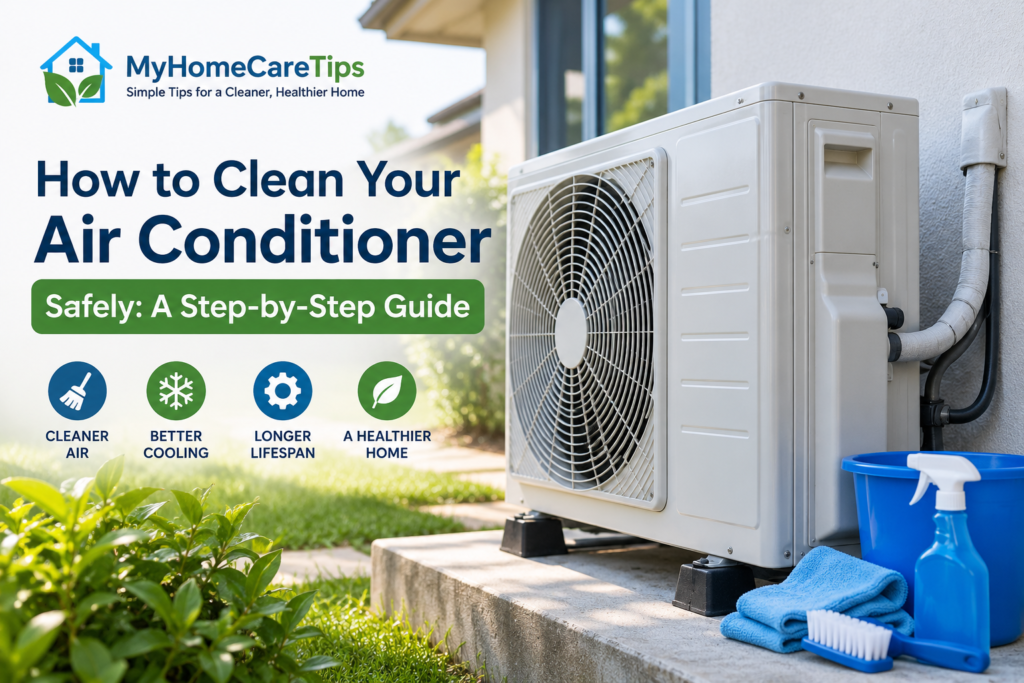
A clean air conditioner can help maintain good airflow, support efficient cooling, and keep your home more comfortable. Over time, dust and dirt can accumulate on the air filter, vents, and outer surfaces, making regular maintenance important.
Fortunately, some basic cleaning tasks can be completed at home without taking the air conditioner apart. The key is to follow the manufacturer’s instructions, protect the electrical components from moisture, and know when a job requires a qualified technician.
This guide explains how to clean an air conditioner safely, how often to maintain it, and which problems should not be handled as a DIY task.
What You Will Need
Gather these items before you begin:
- A soft microfiber cloth.
- A vacuum cleaner with a soft brush attachment, if available.
- A soft cleaning brush.
- Clean water.
- Mild detergent, if permitted by the manufacturer’s instructions.
- A clean towel for drying.
- A stable step stool, if needed to reach the unit safely.
You may not need every item for your particular air conditioner. Check the user manual before using water or cleaning products on any component.
1. Turn Off the Air Conditioner and Disconnect the Power
Safety should always come first when cleaning an electrical appliance.
Switch off the air conditioner and disconnect its power supply before opening the panel or removing the filter. For a hardwired unit, follow the manufacturer’s shutdown instructions and use the appropriate electrical isolator if it is safe to do so.
Never open electrical compartments or touch internal wiring while cleaning. If you notice damaged cables, burning smells, sparks, or signs of electrical damage, leave the unit switched off and contact a qualified technician.
Allow the fan to stop completely before beginning.
2. Remove and Clean the Air Filter
The air filter collects dust and other particles before air passes through the unit. A dirty filter can restrict airflow and reduce cooling performance.
Follow these steps:
- Open the front panel according to the manufacturer’s instructions.
- Carefully remove the filter without bending or tearing it.
- Inspect it for dust, dirt, and damage.
- If the filter is suitable for vacuum cleaning, gently remove loose dust with a soft brush attachment.
- If it is washable, rinse it with water and use a small amount of mild detergent only when the manufacturer permits it.
- Allow the filter to dry completely in a clean, shaded, well-ventilated place.
Some filters are not washable and must be replaced according to the manufacturer’s instructions. Do not use harsh chemicals, very hot water, or excessive force.
Never reinstall a wet filter, and do not operate the air conditioner without its required filter in place.
3. Clean the Air Conditioner Vents and Front Panel
Dust can collect around the air outlet, intake grille, and front panel. These areas can usually be cleaned without dismantling the appliance.
Use a soft, dry microfiber cloth to remove loose dust. If additional cleaning is needed, lightly dampen the cloth and follow the manufacturer’s guidance.
Avoid spraying water or cleaning products directly onto the unit. Keep moisture away from the display, control panel, electrical connections, and openings leading into the internal components.
Do not insert brushes or other objects deep into the vents. Internal fan blades and other components may be damaged if handled incorrectly.
4. Wipe the Outer Surface
Clean the outside casing with a soft cloth to remove dust and ordinary household dirt.
If the surface needs more than dry dusting, use a cloth lightly dampened with an approved cleaning solution. Wipe away any remaining moisture with a clean cloth.
Avoid abrasive sponges, strong solvents, and scouring powders, as these can scratch or damage the finish.
For a split air conditioner, limit DIY cleaning to the accessible outer surfaces and other areas identified as user-maintainable in the manual. Do not remove the casing to reach internal components.
5. Check the Area Around the Air Conditioner
The space around the unit can affect airflow and make it easier for dust to accumulate.
Remove dust and loose debris from accessible areas around the indoor unit. Keep curtains, furniture, and other objects from blocking the air intake or outlet.
If your home has an outdoor condenser unit, keep the surrounding area clear of leaves and other debris where this can be done safely from the ground. Do not climb onto roofs, remove protective panels, or reach inside the outdoor unit.
Never spray water into electrical components or attempt to wash internal parts without the appropriate instructions and equipment.
6. Reinstall the Filter Correctly
Once the filter is completely dry, return it to its original position.
Make sure it fits securely and faces the correct direction, if the design specifies one. Close the front panel properly and check that no parts have been left loose.
A filter that is incorrectly installed may allow dust to bypass it or interfere with airflow. If the filter is damaged or no longer fits securely, replace it with the correct type recommended for your model.
7. Restore Power and Test the Air Conditioner
After confirming that all cleaned components are dry and correctly installed, restore the power supply and switch on the air conditioner.
Allow it to run normally and check that:
- Air flows from the outlet as expected.
- The unit responds to its controls.
- There are no unusual noises or burning smells.
- No unexpected water is leaking from the unit.
If you notice a burning smell, unusual grinding noises, electrical problems, or persistent water leakage, switch the unit off and seek professional assistance. Do not remove internal components to investigate the problem yourself.
How Often Should You Clean Your Air Conditioner?
The ideal cleaning schedule depends on the type of air conditioner, how often it is used, and the amount of dust in your home.
Check the Filter Every Two to Four Weeks
During periods of frequent use, inspect the filter every two to four weeks. Some manufacturers recommend cleaning as often as every two weeks, especially in dusty environments. Clean or replace it according to the manufacturer’s instructions and its actual condition.
Homes with pets, frequent cooking, open windows, or heavy dust may need more frequent checks.
Wipe the Outer Surfaces Monthly
Wipe accessible outer surfaces and the front panel about once a month, or whenever dust becomes noticeable.
This helps prevent visible dirt from accumulating and makes routine maintenance easier.
Arrange Periodic Professional Servicing
A qualified air-conditioning technician can inspect and service components that ordinary household cleaning cannot safely reach. Depending on the system and its condition, this may include internal coils, the drainage system, the blower, and other mechanical components.
Arrange servicing when recommended by the manufacturer, and sooner if the unit develops persistent odors, reduced cooling, recurring leaks, or other unusual symptoms.
Common Air Conditioner Cleaning Mistakes to Avoid
Using Too Much Water
Water entering electrical parts can cause damage or create an electrical hazard. Use a cloth rather than spraying the indoor unit directly.
Reinstalling a Wet Filter
A damp filter can interfere with proper operation and contribute to moisture problems. Allow washable filters to dry completely before reinstalling them.
Using Harsh Cleaning Products
Strong solvents and abrasive cleaners may damage plastic surfaces and filter materials. Use only products approved by the manufacturer.
Opening the Unit to Clean Internal Components
Fans, coils, wiring, and other internal parts can be delicate or hazardous to handle. Leave internal cleaning and repairs to a qualified technician unless the manufacturer explicitly identifies a task as safe routine maintenance.
Ignoring the Cause of Persistent Odors
An unpleasant smell that remains after basic cleaning may indicate trapped moisture, a drainage issue, or contamination inside the unit. Repeatedly wiping the outer surfaces will not resolve every underlying problem.
Signs Your Air Conditioner Needs Professional Attention
Basic cleaning is not a substitute for repair or professional servicing. Contact a qualified technician if you notice:
- Cooling that remains weak after checking the filter.
- Water leaking repeatedly from the unit.
- Ice forming on the unit or its pipes.
- Persistent musty or unpleasant odors.
- Unusual grinding, rattling, or buzzing noises.
- Burning smells, damaged wiring, or electrical problems.
- Heavy dirt or suspected mold inside inaccessible components.
Do not attempt to repair refrigerant lines, handle electrical wiring, or dismantle the compressor yourself.
Final Thoughts
Cleaning your air conditioner regularly can help maintain airflow, support efficient operation, and keep your home more comfortable. Simple tasks such as cleaning a suitable air filter, wiping accessible surfaces, and keeping the surrounding area clear can make routine maintenance easier.
Always disconnect the power before cleaning, keep electrical components dry, and follow the instructions for your specific model. For internal cleaning, recurring problems, or signs of damage, a qualified technician is the safer choice.
A consistent maintenance routine helps you identify problems earlier and take better care of your home’s cooling system.