
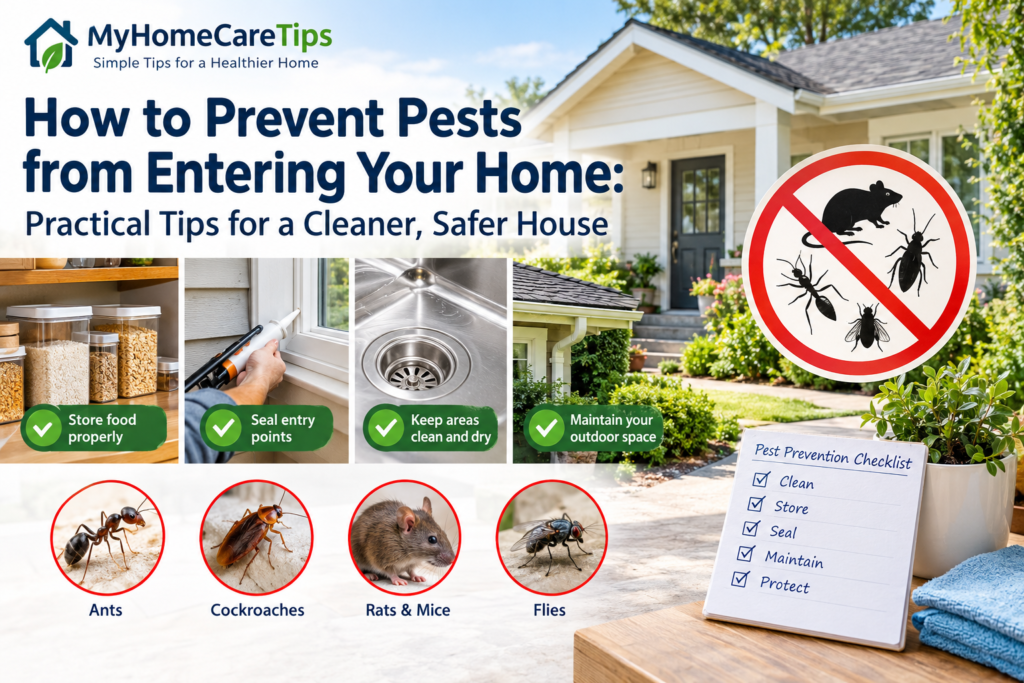
Pests such as ants, cockroaches, rats, mice and flies can become a problem in any home. They may contaminate food, damage household belongings and create unpleasant living conditions. Some pests can also spread germs or trigger allergic reactions.
Keeping pests away is not just about removing them after they appear. It also involves reducing the conditions that attract them and blocking the places they use to enter your home.
The good news is that several practical habits can help reduce the risk of an infestation. Proper food storage, regular cleaning, waste management, moisture control and sealing gaps around your property can make your home less attractive to common household pests.
In this guide, you will learn how to prevent pests from entering your home, what mistakes to avoid and when to contact a qualified pest-control professional.
1. Keep Your Kitchen Clean and Remove Food Sources
Food crumbs, spills, grease and uncovered food can attract ants, cockroaches, flies and rodents. Even small amounts of food left overnight may encourage pests to return.
To reduce the risk:
- Wipe kitchen counters after preparing meals.
- Clean food spills and crumbs promptly.
- Sweep or vacuum areas beneath tables and appliances when accessible.
- Wash dirty dishes instead of leaving them in the sink for long periods.
- Clean food residue from cooking areas regularly.
- Store dry foods in clean, tightly sealed containers.
- Avoid leaving uncovered food on countertops overnight.
Pay attention to areas that are easy to overlook, such as corners, cupboard shelves and spaces behind accessible kitchen appliances.
If you notice pests repeatedly appearing in one area, investigate possible food sources rather than relying only on sprays or traps.
2. Store Food Properly
Food left in open packages can attract pests and make it difficult to keep cupboards clean.
Transfer opened foods such as rice, flour, cereal and other dry ingredients into clean containers with tight-fitting lids. Check food packages for damage before storing them, and follow the storage instructions for each product.
Keep pet food in sealed containers where appropriate, and avoid leaving uneaten pet food out for long periods.
Inspect cupboards occasionally for spilled ingredients, damaged packaging, droppings or signs of insects. Remove contaminated food safely and clean the affected area.
If pests are found inside stored food, do not eat food that may have been contaminated. Dispose of it safely and inspect nearby packages to determine whether the problem has spread.
3. Dispose of Household Waste Properly
Rubbish can provide food and shelter for pests, especially when bins are left uncovered or waste accumulates for several days.
Use bins with secure lids and empty them regularly. Rinse containers that held food or sugary drinks before placing them in recycling or waste storage, where appropriate.
Keep the area around your rubbish bin clean and remove spills promptly. If your household uses an outdoor waste container, keep it closed and position it away from doors and windows where practical.
Avoid leaving food scraps in open containers overnight. If your home uses a compost bin, maintain it according to the recommended method and keep it from attracting unwanted pests.
Good waste management reduces the food sources that may encourage pests to remain around your home.
4. Seal Gaps Around Doors, Windows and Pipes
Small openings can allow ants, cockroaches, mice and other pests to enter a building. Some pests can pass through surprisingly narrow gaps.
Inspect the areas around exterior doors, windows, pipes, vents and other points where services enter the building.
Look for:
- Gaps beneath exterior doors.
- Damaged window screens.
- Cracks around window frames.
- Openings around pipes and cables.
- Holes in walls or damaged sections of the building.
- Gaps around vents that are not properly screened.
Seal suitable gaps with materials appropriate for the location. Door sweeps and properly fitted screens can help reduce pest entry, while suitable sealants may be useful around small openings.
For larger holes, damaged structures or gaps around pipes, choose a repair method appropriate for the building. If rodents are entering through an opening, use materials that resist gnawing rather than relying on soft filler alone.
Do not block ventilation openings, drainage routes or access points required for safe appliance operation. If you are unsure how to seal an opening safely, consult a qualified repair professional.
5. Control Moisture and Fix Water Leaks
Many pests are attracted to water or damp conditions. Leaking pipes, dripping taps, wet cupboards and water that collects around the property can provide moisture that pests need to survive.
Inspect your kitchen, bathroom, laundry area and other places where water is used. Repair dripping taps and leaking pipes promptly, and dry wet surfaces when practical.
Check beneath sinks for dampness, water stains or damaged storage materials. Make sure the area around washing machines and other water-using appliances is not continually wet.
Outside the home, remove unnecessary containers that collect rainwater and check that drainage areas are not blocked.
Moisture control is particularly useful when trying to reduce conditions that attract cockroaches and other unwanted pests. However, persistent dampness may indicate a plumbing or drainage problem that requires professional attention.
6. Keep Your Bathroom and Drains Clean
Bathrooms and drains can collect hair, soap residue, organic debris and moisture. These conditions may attract certain insects, particularly where drains are poorly maintained.
Clean bathroom surfaces regularly and remove hair or debris from accessible drain covers. Keep the area around sinks, showers and toilets as dry as practical between uses.
If you notice small flies repeatedly gathering near a drain, inspect the area for residue and consider having the drain cleaned appropriately.
Do not pour pesticides or harsh chemicals into drains unless the product is specifically approved for that use and its instructions permit it. Never mix drain cleaners or other chemical products, as dangerous reactions may occur.
If an insect problem continues despite cleaning, a pest-control professional can help identify the source and recommend an appropriate treatment.
7. Maintain Your Yard and Outdoor Areas
The area surrounding your home can influence how easily pests approach the building.
Keep outdoor rubbish in closed containers, remove food scraps and avoid allowing discarded materials to accumulate beside exterior walls.
Where practical:
- Trim vegetation that touches the building.
- Remove unnecessary piles of cardboard, wood and other materials close to the house.
- Keep outdoor storage areas tidy.
- Remove standing water from containers that are not intended to hold water.
- Maintain gutters and drainage areas so rainwater can flow away properly.
- Store firewood and similar materials away from exterior walls where possible.
These steps can reduce potential hiding places and help make the immediate surroundings less attractive to certain pests.
Do not disturb nests or colonies of stinging insects yourself. If you find a potentially dangerous nest near an entrance or frequently used area, seek assistance from a qualified professional.
8. Check Items Before Bringing Them Indoors
Some pests enter homes through items brought in from outside. Cardboard boxes, second-hand furniture, luggage, plants and stored belongings may occasionally carry insects or other unwanted pests.
Before bringing used furniture into your home, inspect seams, joints, cushions and other hiding places. Pay attention to signs such as live insects, shed skins, eggs or unusual marks.
Inspect cardboard boxes and stored items when they arrive, particularly if they have been kept in damp or pest-prone areas.
When returning from a trip, check luggage and clothing if you have reason to suspect exposure to bedbugs or other pests. Follow reliable guidance for the particular pest rather than applying pesticides indiscriminately.
If you discover signs of bedbugs, avoid moving potentially infested furniture or belongings from room to room. Contact a qualified pest-control professional for identification and treatment advice.
9. Use Pest-Control Products Carefully
Cleaning and prevention may not always be enough to solve an existing pest problem. In some cases, a suitable trap, bait or approved pesticide may be necessary.
Before using any pest-control product, identify the pest as accurately as possible and read the entire product label. Only use the product for the purpose and location specified by the manufacturer.
Follow these precautions:
- Keep pesticides away from children and pets.
- Store products in their original, labelled containers.
- Never transfer pesticides into food or drink containers.
- Do not use outdoor pesticides indoors unless the label explicitly permits indoor use.
- Avoid spraying food, utensils, bedding or food-preparation surfaces unless the product label specifically allows the application and explains the required precautions.
- Never mix different pesticides or combine them with household cleaning products.
- Follow all instructions about ventilation, protective equipment and how long people or pets must remain away from a treated area.
More pesticide does not necessarily produce better results. Using a product incorrectly can expose your household to unnecessary risks.
If you are unsure which product is suitable, ask a qualified pest-control professional for advice.
10. Know When to Contact a Pest-Control Professional
Some pest problems can be managed with routine cleaning and prevention. Others require a more thorough inspection and specialised treatment.
Consider professional assistance when:
- You repeatedly see cockroaches, rodents or other pests despite taking preventive measures.
- You find droppings, damaged food packaging or signs of nesting.
- You suspect bedbugs in mattresses, furniture or other household items.
- Pests are entering through inaccessible wall spaces, ceilings or structural openings.
- You discover a nest of stinging insects near your home.
- You are unsure which pest is present or how to control it safely.
Before hiring a service, ask what pest it is intended to treat, which methods will be used, what preparation is required and what safety precautions apply to children, pets and household members.
Avoid anyone who recommends using an unidentified chemical or cannot explain the safety instructions for the treatment.
Professional help may cost more initially, but correct identification and targeted treatment can prevent repeated unsuccessful attempts to control the same problem.
A Simple Weekly Pest-Prevention Checklist
Use this checklist to make pest prevention part of your household routine.
In the kitchen:
- Wipe counters and clean food spills.
- Store opened food in sealed containers.
- Check cupboards for crumbs or damaged food packages.
- Empty rubbish bins and clean them when necessary.
In the bathroom and laundry area:
- Check beneath sinks for leaks.
- Remove visible hair and debris from accessible drain covers.
- Dry surfaces where water collects.
- Look for signs of insects or unusual odours.
Around the house:
- Check doors and windows for gaps or damaged screens.
- Look for droppings, gnaw marks or other signs of pest activity.
- Inspect areas where food, rubbish or stored items may attract pests.
- Arrange repairs for any openings or leaks you discover.
Outside the property:
- Check rubbish containers and outdoor storage areas.
- Remove standing water where practical.
- Keep vegetation and stored materials from accumulating against exterior walls.
- Look for damaged screens, gaps or other potential entry points.
You do not need to complete every task at once. The aim is to notice potential problems early and deal with them before they become more difficult to manage.
Common Pest-Prevention Mistakes to Avoid
Even a clean home can develop a pest problem, but certain habits can make infestations more likely.
Avoid these common mistakes:
- Leaving food uncovered overnight.
- Allowing rubbish to accumulate in open containers.
- Ignoring leaking pipes or persistent dampness.
- Leaving gaps around doors, windows and pipes unrepaired.
- Bringing used furniture indoors without inspecting it.
- Using pesticides without identifying the pest or reading the product label.
- Assuming that one spray will permanently solve an infestation.
- Ignoring recurring pest activity instead of investigating its source.
Effective prevention combines cleanliness, building maintenance, moisture control and appropriate treatment when needed.
Conclusion
Preventing pests from entering your home begins with removing the food, water and shelter that attract them. Keep kitchen surfaces clean, store food properly, dispose of rubbish responsibly, repair leaks and seal suitable openings around your property.
Regularly inspect indoor and outdoor areas for signs of pest activity, and take action when you notice a problem. If pests keep returning or you discover a serious infestation, seek help from a qualified pest-control professional.
No single method can guarantee a completely pest-free home. However, consistent preventive habits can reduce the conditions that attract pests and help you maintain a cleaner, more comfortable living environment.
Further Reading
For additional guidance on preventing pests and using pest-control products safely, consult these reliable resources:
- U.S. Environmental Protection Agency: Do’s and Don’ts of Pest Control
- U.S. Environmental Protection Agency: Integrated Pest Management
- U.S. Centers for Disease Control and Prevention: Preventing Rodent Infestations
Product availability and pest-control requirements vary by location. Follow local guidance and the instructions for any product you use.