
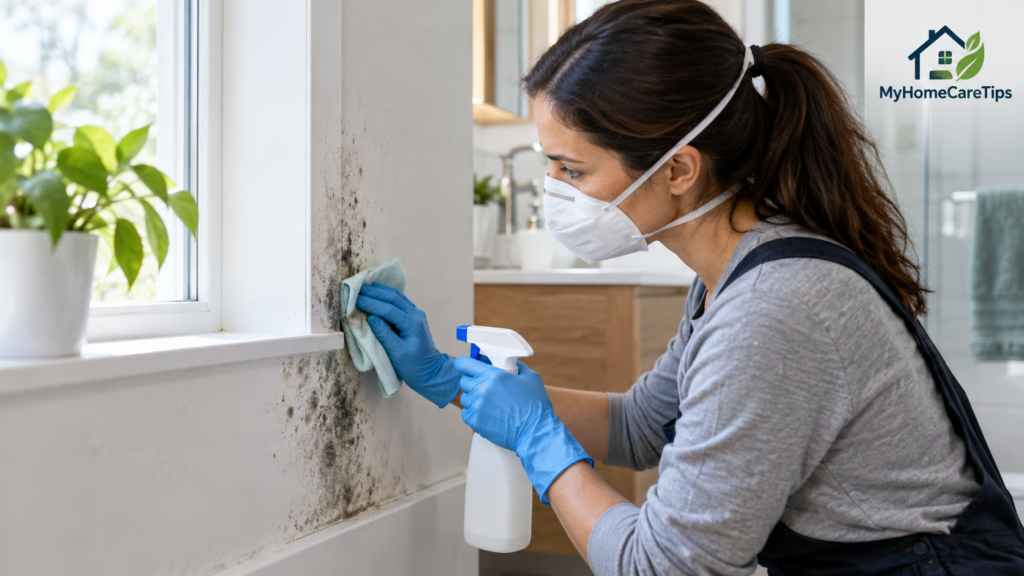
Mold can develop in homes when moisture remains on walls, ceilings, floors, furniture, and other surfaces. It may appear after a roof leak, plumbing problem, flooding, or repeated condensation around windows. Recognizing the early signs can help you address moisture problems before they cause more damage to your home.
Mold prevention starts with controlling moisture. Cleaning visible mold without correcting the underlying problem may allow it to return. This guide explains how to recognize possible signs of mold, what to do when you discover it, how to address small areas safely, and when to seek professional help.
What to Do First When You Find Mold
If you notice mold or suspect hidden mold, begin by looking for the source of moisture. Check for leaking pipes, roof damage, condensation around windows, or damp areas behind furniture.
Take a photograph of the affected area so you can monitor whether it spreads or returns. Avoid painting over mold or covering a damp surface before correcting the moisture problem.
If the affected material is soft, the damage extends behind a wall, or you cannot identify the source of moisture, seek professional advice before disturbing the area.
Early Signs of Mold in Your Home
1. Musty Odor
A persistent musty or earthy smell may indicate excess moisture or possible hidden mold, even when there are no visible spots.
Check beneath sinks, around windows, behind furniture, and inside cupboards for dampness, condensation, leaks, or peeling paint. Notice whether the smell becomes stronger after rainfall, showering, or using an air conditioner. These observations may help you identify where moisture is accumulating.
A musty smell alone does not confirm mold. If the odor persists and you cannot locate its source, avoid opening walls yourself and consider arranging a professional inspection.
2. Dark or Discolored Spots
Mold may appear as black, green, brown, or white patches on walls, ceilings, tiles, window frames, and other surfaces. Its color alone cannot reliably identify the type of mold present.
Inspect the surrounding area for possible sources of moisture, including leaking pipes, roof damage, or condensation. Take a photograph and check periodically to see whether the affected area grows or returns.
If the surface feels soft, swollen, or persistently damp, the problem may extend beneath the visible surface. Address the moisture source and seek professional help if the damage appears extensive.
3. Peeling Paint or Wallpaper
Paint that bubbles, cracks, or peels may indicate moisture trapped behind the surface. Wallpaper may also loosen when the wall beneath it becomes damp.
Check nearby window frames, plumbing connections, ceilings, and roof areas for leaks or condensation. Pay attention to whether the damage worsens after rainfall or showering.
Do not paint over the damaged area before identifying and correcting the moisture problem. If you suspect mold behind wallpaper, avoid removing it yourself because disturbing contaminated materials may release spores.
Arrange a professional inspection if the wall is soft, swollen, or repeatedly develops the same problem.
4. Condensation on Windows and Walls
Condensation occurs when moist indoor air meets a cooler surface. Occasional condensation may not indicate mold, but repeated moisture can encourage mold growth.
Check windows, corners of external walls, and areas behind large pieces of furniture. If water regularly collects on these surfaces, improve ventilation where appropriate and investigate whether indoor humidity is too high.
Dry accumulated water and monitor the affected areas. If dampness continues despite these measures, investigate possible leaks or other moisture sources.
How to Clean Small Areas of Mold Safely
1. Protect Yourself First
Before cleaning a small area of mold, consider the condition of the surface, the extent of the growth, and the possible health risks.
Protective equipment may include gloves, goggles, and a properly fitted N95 respirator. Keep children away from the cleaning area.
People with asthma, mold allergies, chronic lung disease, or weakened immune systems should not clean mold themselves. Protective equipment does not make every cleanup safe, particularly when mold is extensive or hidden.
2. Improve Ventilation
Where appropriate, open nearby windows or doors to allow fresh air to circulate. Avoid directing dust or airborne particles into other parts of the home.
If you suspect mold has spread into your heating or air-conditioning system, seek professional advice before operating it. Air movement through a contaminated system may distribute particles to other rooms.
3. Clean Suitable Hard Surfaces
Small areas of mold on suitable hard surfaces can often be cleaned with detergent and water.
Follow these steps:
- Put on appropriate protective equipment.
- Remove loose dirt carefully without brushing or scraping in a way that spreads dust.
- Clean the affected hard surface with detergent and water, following the manufacturer’s instructions.
- Dry the surface completely.
- Correct the leak, condensation, or other moisture problem that caused the growth.
Never mix bleach with ammonia, acids, or other cleaning products. Mixing cleaning chemicals can release dangerous gases.
Carpets, ceiling tiles, insulation, and other absorbent materials may be difficult to clean thoroughly once mold has penetrated them. Extensive contamination or damage beneath the surface may require professional removal.
4. Check the Area After Cleaning
After cleaning, check that the surface remains dry and that the original moisture source has been corrected.
Monitor the area over the following days and weeks. If mold returns, investigate the underlying moisture problem instead of repeatedly cleaning the same patch.
Persistent growth may indicate a hidden leak, continuing condensation, or moisture trapped inside a wall or other building material.
When to Call a Professional
1. The Mold Covers a Large Area
Large areas of mold may require specialised cleaning methods and equipment.
The U.S. Environmental Protection Agency recommends considering professional assistance when mold covers more than approximately 10 square feet, or when extensive water damage has occurred.
A smaller area may also require professional attention if the moisture source is hidden, the affected material is difficult to clean, or the water may be contaminated.
2. Mold Keeps Coming Back
Mold that returns after cleaning often indicates that the underlying moisture problem has not been resolved.
Inspect accessible areas around plumbing, windows, ceilings, and roof spaces for signs of leaks or condensation. Do not dismantle walls or ceilings to search for hidden growth.
If the problem persists or the source of moisture remains unclear, arrange a professional inspection.
3. Mold Is Inside a Wall or Ceiling
Visible mold may sometimes be a sign of a larger problem behind a wall, ceiling, or other building material.
Warning signs include persistent musty odors, recurring damp patches, swollen surfaces, and paint that repeatedly peels after repairs.
Avoid cutting into walls or removing wallpaper to investigate suspected hidden mold. A qualified professional can assess the damage, identify possible moisture sources, and recommend appropriate remediation.
4. There Has Been Extensive Water Damage
Flooding, sewage backups, burst pipes, and major roof leaks can affect materials that are difficult to dry or clean properly.
If water has entered walls, ceilings, insulation, or electrical areas, seek appropriate professional assistance. Keep away from electrical equipment exposed to water and do not enter areas that may be unsafe.
Promptly addressing extensive water damage can help limit further deterioration and reduce the likelihood of mold developing.
How to Prevent Mold from Returning
1. Repair Water Leaks Quickly
Leaking pipes, roofs, windows, and taps can create conditions that encourage mold growth.
Inspect accessible plumbing connections and areas beneath sinks periodically. Repair leaks promptly, and check ceilings and walls for signs of water damage after heavy rainfall.
Dry wet materials within 24–48 hours when possible. If the damage is extensive or involves sewage, seek professional assistance.
2. Keep Indoor Humidity Under Control
High indoor humidity can encourage mold growth, especially in poorly ventilated rooms.
Aim to keep indoor relative humidity at 50% or lower when practical. A humidity meter can help you monitor conditions.
Use an air conditioner or dehumidifier when necessary. Repair leaks and address persistent condensation instead of relying on humidity control alone.
3. Improve Bathroom and Kitchen Ventilation
Bathrooms and kitchens often produce substantial amounts of moisture through showering, cooking, and washing.
Use a bathroom exhaust fan during showers and afterward, following the manufacturer’s guidance. Ensure the fan vents outdoors rather than into an enclosed ceiling space.
Use a kitchen range hood while cooking if available. Where weather and outdoor conditions permit, opening windows can also help reduce excess moisture.
Wipe away persistent condensation and investigate areas that repeatedly become damp.
4. Dry Wet Areas Promptly
Water left on floors, walls, furniture, and other materials can encourage mold growth if the affected areas remain damp.
After a leak or spill, remove standing water and dry wet materials as soon as possible, ideally within 24–48 hours.
Increase airflow when it is safe to do so, and check that the affected materials are completely dry. If materials remain damp or the water damage is extensive, seek professional assistance.
5. Check Hidden and Overlooked Areas
Some moisture problems develop in areas that receive little attention during routine cleaning.
Periodically inspect:
- Beneath kitchen and bathroom sinks.
- Around window frames.
- Behind furniture placed against external walls.
- Around accessible plumbing connections.
- On ceilings beneath bathrooms or roof areas.
- Inside cupboards that feel unusually damp.
These checks can help you notice leaks, condensation, or recurring dampness before the damage becomes more extensive.
Do not dismantle walls or ceilings to investigate suspected hidden mold. Seek professional advice when signs suggest that the problem extends beyond the visible surface.
Final Thoughts
Recognizing early signs of mold can help you identify moisture problems before they cause more extensive damage. Musty odors, discolored patches, peeling paint, and recurring condensation are all reasons to investigate possible sources of moisture.
For small areas on suitable hard surfaces, careful cleaning may be appropriate. However, correcting the moisture source is essential to preventing mold from returning.
Seek professional assistance for large areas of mold, suspected hidden growth, recurring problems, or extensive water damage. Addressing moisture promptly and inspecting vulnerable areas regularly can help keep your home drier and better maintained.
Sources
- U.S. Environmental Protection Agency — Mold Cleanup in Your Home
https://www.epa.gov/mold/mold-cleanup-your-home - Centers for Disease Control and Prevention — Mold Cleanup
https://www.cdc.gov/mold-health/about/clean-up.html